Community Initiative · CANWYF · Araromi Ekiti, Ekiti State · Est. 2025

Ecovitalize Africa

Planting Economic Trees. Reclaiming Land. Building Livelihoods.

We gave 2,400 cocoa seedlings to 40 farmers in Araromi Ekiti in 2025. That was the beginning — and we learnt from it. Now we are building a model that puts economic trees into the hands of farmers, women, youth, and students across Ekiti State, reclaims degraded land, and creates income that lasts for a generation.

🌱
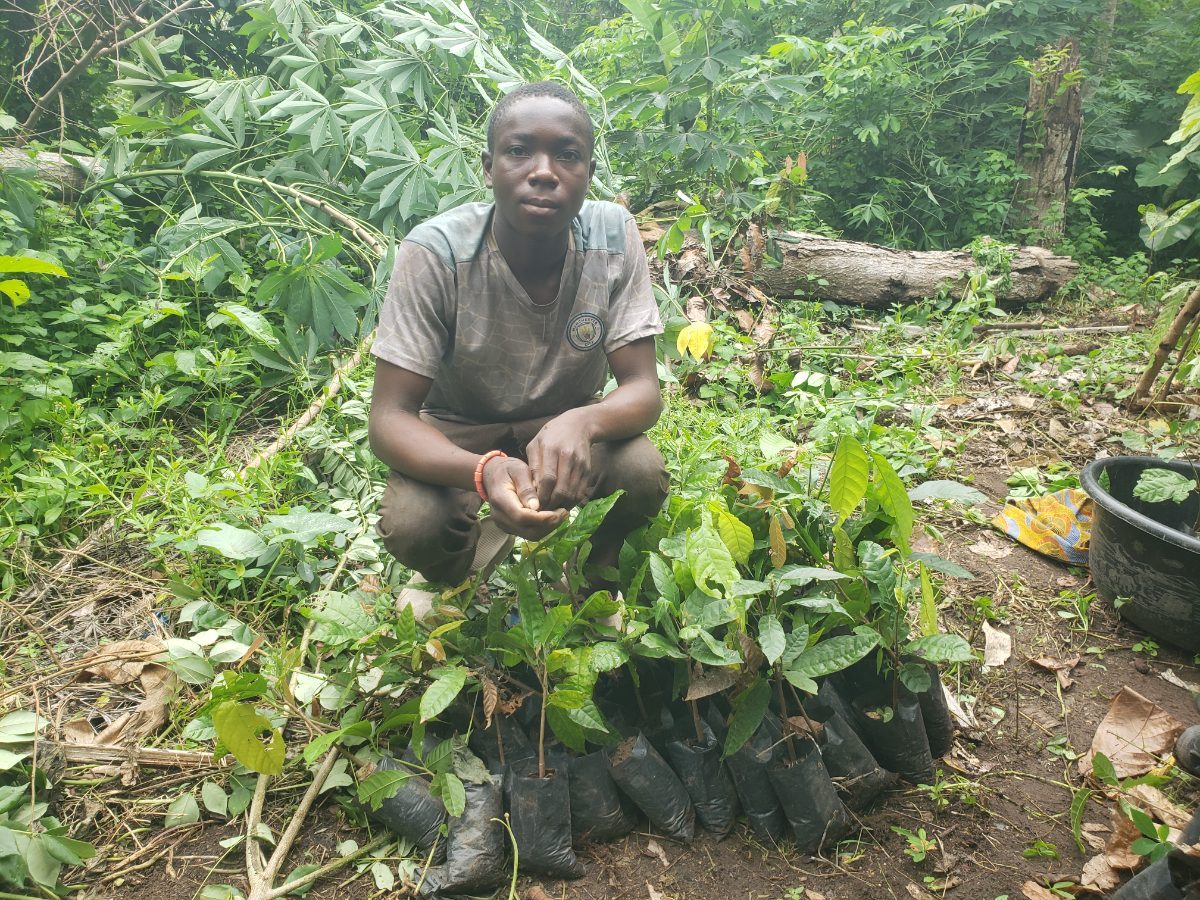
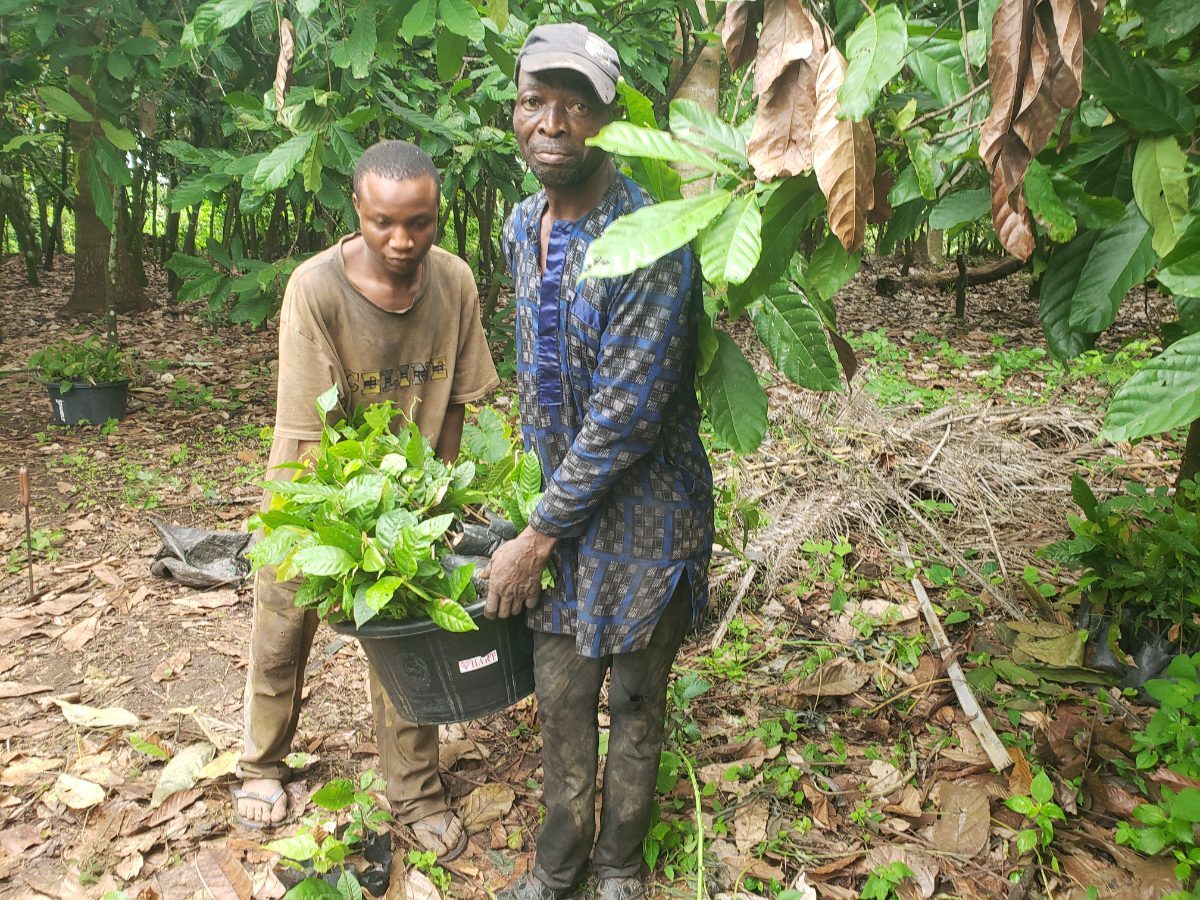
2025 Pilot Complete: 2,400 cocoa seedlings distributed to 40 farmers in Araromi Ekiti during the 2025 planting season. We learnt what works and what to do differently. 2026 is a year of planning — not pausing.
📍 Araromi Ekiti · Ijero LGA
🌳
2,400Seedlings distributed · 2025 pilot
👨‍🌾
40Farmers in the 2025 cohort
📍
Araromi EkitiIjero LGA, Ekiti State · Pilot community
🎯
2027 OnwardsNext distribution — scaled model
🤝
Help NeededNursery, funding, technical partners

2,400 seedlings. 40 farmers.
One honest year of learning.

In the 2025 planting season, CANWYF distributed 2,400 cocoa seedlings to 40 smallholder farmers in Araromi Ekiti, Ijero LGA, Ekiti State. This was Ecovitalize Africa's first practical field activity — small by design, so that we could learn before we scaled.

The distribution reached farmers who had never previously received structured support for tree crop establishment. Cocoa was chosen as the pilot species because it is an economically significant tree crop for Ekiti State, it grows well in the local agroforestry context, and — critically — it creates income for a farmer's household for decades after planting. A cocoa tree planted today can still be productive in 30 years.

The pilot taught us things we could not have learned from planning alone. We identified what makes a distribution succeed, what farmers actually need beyond the seedling itself, and how a larger programme must be structured to achieve survival rates, income impact, and community ownership of the trees.

2,400
Cocoa seedlings distributed in the 2025 planting season
40
Farmers in the first cohort · Araromi Ekiti
60
Average seedlings per farmer in the 2025 cohort
2027
Target year for next scaled distribution
🌿
🌱
🤝
What We Learnt from the 2025 Pilot
Seedling survival depends heavily on the farmer receiving proper care instructions and follow-up support — not just the seedling itself at distribution.
A nursery programme must precede distribution — purchased seedlings create supply uncertainty and inflate cost. Producing our own gives us control over quality, timing, and volume.
Species diversity matters. A single-crop distribution creates income concentration risk. The 2027 model will include multiple economic tree species suited to different land types and household needs.
Women and youth need to be primary recipients, not secondary beneficiaries. The next distribution will allocate a minimum of 50% to women and youth farmers.

No distribution in 2026.
That is a deliberate decision.

Scaling a tree planting programme without the infrastructure to support it produces waste, not impact. 2026 is the year we fix everything the pilot showed us — so that 2027's distribution is genuinely transformative.

🔧
2026 is a planning and building year — not a quiet year.

We are using 2026 to establish a community nursery capable of producing 10,000+ seedlings annually, design the multi-species economic tree distribution model, recruit and train community nursery operators, build the distribution and follow-up monitoring framework, and secure the partnerships and funding needed to make 2027's programme sustainable.

We made a conscious choice not to distribute in 2026 because a poorly prepared distribution at scale does more harm than a year of groundwork. The farmers who receive trees in 2027 will get better support, better species, and a better outcome because we paused here.

2026 Preparation
🌿Establish Community Nursery
Set up a nursery in Araromi Ekiti capable of producing 10,000+ seedlings per season — managed by trained local youth operators.
2026 Preparation
📋Design Multi-Species Model
Finalise the species mix (cocoa, kolanut, oil palm, timber, fruit trees) based on land type mapping and household income goals.
2026 Preparation
👥Train Nursery & Distribution Teams
Recruit and train community nursery managers, care trainers, and monitoring volunteers who will support each farmer post-distribution.
2026 Preparation
🤝Secure Funding & Technical Partners
Approach forestry agencies, agricultural development partners, and donor organisations for nursery funding and technical support.
2026 Preparation
📍Map Target Land
Identify and document degraded and underutilised land that will be targeted in the 2027 distribution — GPS-mapped and verified with iTONA.

Economic trees — not just greenery.

Every tree in the Ecovitalize model is chosen because it does two things simultaneously: it restores land and fights climate change, and it generates income for the family that plants it. A tree is only planted once. The benefit lasts for decades.

🍫
Cocoa
Cash Crop · Perennial
The pilot crop. Cocoa is deeply embedded in Ekiti's farming culture and commands strong market prices. A properly managed cocoa farm can produce income for 30+ years. It also provides canopy cover that restores soil and protects against erosion.
First yield: 3–5 years · Market: NGN 1,500–2,500/kg dry beans
🌴
Kolanut
Cash Crop · Cultural Significance
Kolanut is both an important cultural tree and a significant income source for Yoruba communities. It grows well in Ekiti's forest margin zones and has strong domestic demand. A kolanut tree improves soil structure while providing shade for understorey crops.
First yield: 4–7 years · Market: strong domestic demand year-round
🫒
Oil Palm
Cash Crop · High Yield
Oil palm provides multiple income streams — palm oil, palm kernel, and fronds — and grows on land that other crops struggle with. It is a cornerstone of West African rural income and food processing. Ecovitalize distributes improved hybrid varieties with higher yield and shorter time to first production.
First yield: 2–3 years · Multiple marketable products per tree
🍊
Citrus & Fruit Trees
Food Security · Quick Income
Orange, mango, avocado, and pawpaw trees produce income and improve household nutrition faster than the long-season cash crops. They are especially suited for women and youth farmers who need earlier income returns and who often farm smaller, home-adjacent plots.
First yield: 1–3 years · Household food security + local market sales
🪵
Timber Trees
Long-Term Asset · Land Restoration
Teak, mahogany, and iroko planted on degraded land generate significant value over 15–25 years while actively restoring soil quality, carbon storage, and biodiversity. They are particularly suited to land reclamation activities where immediate crop production is not viable.
Long-term asset: 15–25 year value · Carbon credit eligible
🌿
Moringa & Medicinal Trees
Health · Women's Programme
Moringa grows fast, tolerates drought, and provides a marketable nutritional product within months of planting. For women and students in particular, it provides a rapid-return income source alongside longer-season trees. It also contributes to soil nitrogen fixation.
First yield: 6–12 months · Nutritional and health market demand

Every tree has a name, a household, and a purpose.

The 2027 distribution is designed to reach beyond the farmers who already know about agricultural programmes. Women who farm but are rarely first in line. Young people who want to farm but lack a reason to invest long-term. Students who can plant a tree today that funds their future.

👩‍🌾
Smallholder Farmers
Established farmers who can integrate economic trees into their existing farms — cocoa, oil palm, and kolanut as additional income-generating crops alongside their food crops.
≥ 50%
of all distributed seedlings
👩
Women Farmers
Women are a primary target group — not a secondary one. The 2027 model ring-fences a minimum allocation for women. Fruit trees and moringa, which provide earlier income, are prioritised for women's plots.
Min. 40%
of beneficiaries must be women
Youth (Under 35)
Young farmers and rural youth who are willing to commit to a plot of economic trees as a long-term investment. They receive faster-yielding species alongside cocoa — so there is income in year 2, not just year 5.
Min. 30%
of beneficiaries must be under 35
🎓
Students
Secondary school and tertiary students with access to a family plot can plant trees that will mature as they graduate and enter adult life. This is a long-term investment for their future — and a practical environmental education. Moringa and fruit trees suit student plots well.
New group
First time included in 2027

How a tree becomes an income stream
— and stays one for thirty years.

Every seedling Ecovitalize distributes is selected because it generates real, sustained household income. This is not a charity plant-and-forget programme. It is a structured investment in a family's land — with follow-up, monitoring, and market linkage to make the investment pay off.

🌱 From Nursery to Farmer
CANWYF produces seedlings in a community nursery — then distributes them free to qualifying farmers with an attached care plan and a follow-up commitment from Ecovitalize's community monitors.
Farmer receives seedlings at no cost — zero entry barrier
Care training provided at distribution — not assumed
Three follow-up visits in the first growing season
Survival rate tracked per farmer, per species
💰 The Income Arc
The model uses a mix of early-yielding and long-season species so farmers see income at multiple stages — not just after five years.
Year 1–2: Moringa, pawpaw, and vegetables under young cocoa
Year 3–5: Oil palm and citrus begin producing
Year 5+: Cocoa and kolanut enter production
Year 15+: Timber trees mature — large one-time asset value
🛒 Market Linkage via iTONA
Ecovitalize farmers who enroll in iTONA AFRICA can list tree crop produce on AgroMarket — cocoa beans, palm oil, kolanut, moringa — directly to verified buyers without a middleman.
GPS-mapped plots ensure produce traceability
Tree crop harvest records built into iTONA profile
Direct buyer access via AgroMarket — better prices
Verified income history supports future credit applications
🌍 Climate Revenue Potential
GPS-mapped and verified tree plantings on reclaimed land can qualify for carbon sequestration credits — an additional revenue stream for farmers and for CANWYF's programme sustainability.
Timber and mixed-species plantings eligible for carbon credits
iTONA plot maps provide the GPS documentation required
Partner with climate finance bodies to certify sequestration
Additional income for farmers on degraded land reclaimed for trees

Degraded land is not wasted land.
It is waiting for the right trees.

Ekiti State has significant areas of degraded, eroded, and underutilised land that cannot support annual food crops — but can support tree crops. Ecovitalize's land reclamation approach turns these areas into productive community assets through strategic tree planting.

🔗
Linked to iTONA AFRICA

Reclaimed plots are GPS-mapped through iTONA AFRICA — creating a verified, permanent record of the land, its ownership, and the trees planted on it. This documentation is the basis for carbon credit applications, government land support programmes, and future ownership security for farmers.

Learn About iTONA →
🌋
Eroded Hillsides
Steep slopes with exposed soil and active gully erosion — planted with deep-rooted timber trees and vetiver grass to stabilise soil, stop erosion, and begin long-term restoration. Timber value in 15–25 years.
🌵
Degraded Farm Margins
Farm edges and fallow land with depleted soil — planted with nitrogen-fixing trees like leucaena and moringa to restore fertility, combined with cocoa and oil palm for income. The trees improve the land they grow on.
🏚️
Abandoned or Communal Land
Communal land with no active use — converted to community agroforestry plantations managed by local youth operators. The revenue from timber and tree crops is shared between the community and the youth managers who maintain the plantation.
🏫
School and Institutional Land
Unused land around secondary schools — planted with economic trees as a living classroom and a long-term school asset. Students maintain the trees as part of their agricultural education. The school benefits from the eventual harvest income.
💧
Waterway Buffers
Stream banks and water catchment areas — planted with deep-rooted species to prevent erosion, improve water retention, and protect downstream farms from flooding. Bamboo, vetiver, and fruit trees planted in the riparian zone.
🌾
Agroforestry Integration
Existing food crop farms — economic trees planted in rows between food crops, improving soil, providing shade for sensitive crops, and generating a permanent long-term income source alongside the seasonal food crop harvest.

We need partners, funding, and expertise
to do this at scale.

The model works. The pilot proved it. What we lack is the infrastructure to go from 40 farmers to 400 — and eventually to 4,000. These are the specific gaps we need help closing.

🌱
Nursery Establishment & Production
We need a functioning community nursery in Araromi Ekiti capable of producing 10,000+ quality seedlings per planting season — covering cocoa, kolanut, oil palm, timber species, and fruit trees. This includes physical infrastructure, soil and compost inputs, watering systems, shade nets, and trained operators.
Funding need: ~₦1.2M for starter nursery infrastructure · Technical expertise welcome
🔬
Technical & Research Partners
We are looking for partnerships with forestry institutions, agricultural research bodies, and university faculties who can support species selection, soil analysis, seedling quality standards, and survival rate monitoring. The Cocoa Research Institute of Nigeria (CRIN), Ekiti State University, and similar bodies are potential partners.
Looking for: research collaborations, technical advisors, soil science support
💰
Programme Funding — 2027 Distribution
The 2027 distribution targets 5,000 seedlings to 100 farmers across three communities. Total programme cost including nursery production, distribution logistics, care training, and follow-up monitoring is approximately ₦2.8M. We are approaching environmental grant bodies, development partners, and individual donors.
2027 distribution target: 5,000 seedlings · 100 farmers · ₦2.8M programme cost
🌍
Climate Finance & Carbon Credits
GPS-mapped tree plantings on reclaimed land have the potential to generate carbon credits through verified sequestration programmes. We need guidance from climate finance practitioners on how to structure CANWYF's GPS and plot data to qualify for Verra, Gold Standard, or similar carbon registries — and partners who can walk us through the certification pathway.
Looking for: climate finance advisors, carbon registry experience, NGO certification support
🏪
Market & Offtake Partners
As cocoa, kolanut, and palm oil trees in the 2025 cohort approach first harvest in 2028–2030, we will need verified offtake agreements with processors and exporters. We are looking for forward-looking buyers and processors who want to build a verified, traceable supply chain from smallholder agroforestry farmers in Ekiti State.
Looking for: cocoa processors, palm oil millers, export intermediaries
🏫
School & Student Programme Support
The student component of the 2027 distribution — planting economic trees on school land and family plots — needs a school engagement partner, curriculum material for agricultural education integration, and a sponsor willing to fund the student cohort (approximately ₦180,000 for seedlings and care kits for 50 students).
School cohort cost: ~₦180,000 · Curriculum and engagement partner needed
📧 Contact Us About Ecovitalize →

Reach us at info@canwyf.org with the subject "Ecovitalize Africa Partnership"

Past, present, and what we are building toward.

2025 · Completed
Pilot Distribution
✓ Done
2,400 cocoa seedlings distributed to 40 farmers in Araromi Ekiti
First practical field activity of Ecovitalize Africa
Lessons documented — species, support, and delivery model reviewed
Foundation for the full programme model established
2026 · In Progress
Planning & Infrastructure
● Active
No seedling distribution — deliberate preparation year
Community nursery site identified and establishment planned
Multi-species model designed — cocoa, oil palm, kolanut, timber, fruit
Funding and technical partnerships being developed
Target land identified and GPS-mapped for 2027
2027
Scaled Distribution
○ Planned
5,000 seedlings — 6 species — to 100 farmers across 3 communities
Dedicated women's cohort (min. 40 women farmers)
Youth and student cohorts — new participant groups
Community nursery producing seedlings locally — not purchased
Follow-up monitoring visits for all participants
First market linkages via AgroMarket for produce-ready trees
2028 onwards
Land Reclamation at Scale
○ Vision
20,000+ seedlings annually from community nurseries across Ekiti LGAs
Dedicated degraded land reclamation — 500+ hectares over 3 years
First carbon credit applications for GPS-verified timber plantations
iTONA-linked tree crop market sales at scale — AgroMarket tree produce channel
Replication model published for other states and countries
2030 Vision
West Africa Expansion
○ Vision
Ecovitalize Africa model replicated in 3 West African countries
50,000+ trees planted on verified GPS-documented land
Climate finance revenue sustaining programme operations
100,000+ households with at least one economic tree on their land
Recognised as a model for community-led agroforestry development

Help us plant the next 5,000 trees.

₦2.8 million funds the full 2027 distribution — 5,000 seedlings, 100 farmers, three communities, six economic tree species. We are raising this through grants, partnerships, and individual donors who want to see a real, community-rooted tree planting programme that creates income, restores land, and fights climate change in Ekiti State, Nigeria.