
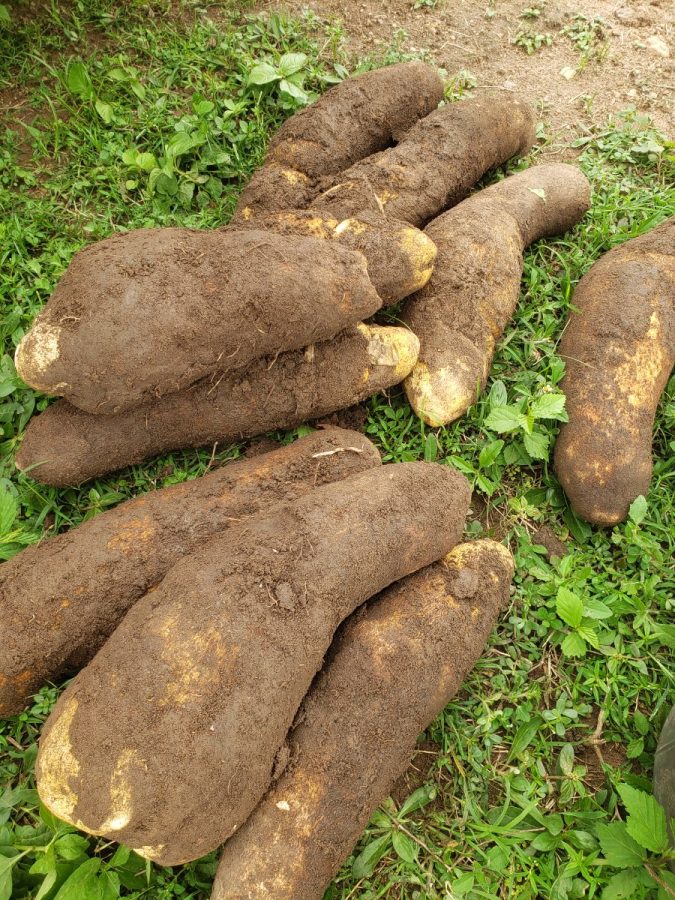
 What if we stopped looking at agriculture simply as the production of food and started looking at it as a public health system?
Every meal begins somewhere.
Before food reaches the market, the restaurant, the supermarket or our homes, it begins with a farmer making decisions on the soil: what to plant, what to apply, when to harvest, how to store it and where to sell it.
Yet, in many communities, the process between planting and consumption remains largely invisible.
We know what we eat, but often do not know who produced it, where it was produced, how it was produced, what was applied to it, or what happened to it before it reached us.
That is a dangerous gap.
Agricultural production cannot be separated from human health and wellbeing. The health of the soil, the health of the crop, the health of the farmer and ultimately the health of the consumer are connected by the same thread.
And when that thread is weak, the consequences can extend far beyond the farm.
The real problem is bigger than farmer literacy
It is tempting to blame farmers for unsafe agricultural practices because some producers may have limited access to formal agricultural education.
But the problem is more systemic than that.
A farmer operating under financial pressure is constantly making economic decisions. When better information is unavailable, when extension services are weak, when markets reward quantity more than quality, and when there is little documentation of what happens on the farm, the incentive to maximise short-term output can become stronger than the incentive to follow safer, more sustainable practices.
This is where the danger lies.
The answer cannot simply be to tell farmers to “do better.”
We must build systems that make better farming visible, verifiable and economically valuable.
We are sitting on a traceability problem
As a community, a state and a nation, we cannot continue consuming agricultural products without taking a serious interest in the process through which they are produced.
We are becoming increasingly sophisticated in the chemicals, technologies and inputs available to agriculture, while our ability to consistently document what happens on the farm has not developed at the same pace.
That imbalance should concern us.
Traceability is therefore not merely a commercial requirement for exporters.
It is about accountability.
It is about knowing the origin of food.
It is about creating records that can help identify unsafe practices.
It is about giving farmers access to knowledge and services based on the realities of their farms.
And it is about creating a food system in which responsibility does not disappear somewhere between the farm gate and the consumer.
This is where iTONA comes in
At the Community Advocacy Network for Women, Youth and Farmers (CAN-WYF), we are building iTONA AFRICA around a simple principle:
You cannot improve what you cannot reliably identify, verify and trace.
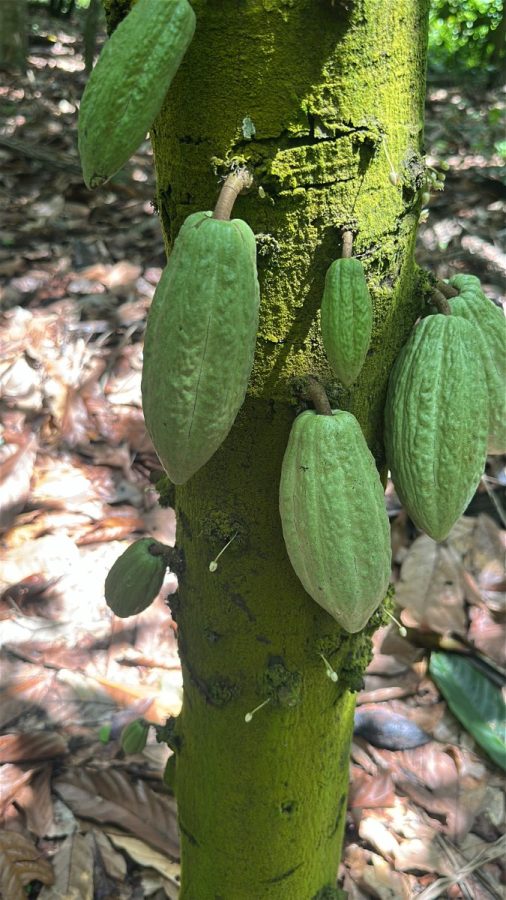
iTONA is designed to create a verified digital identity and agricultural record for participants across the value chain — beginning with the farmer and extending to processors, buyers, transporters and other participants.
The system starts at the farm.
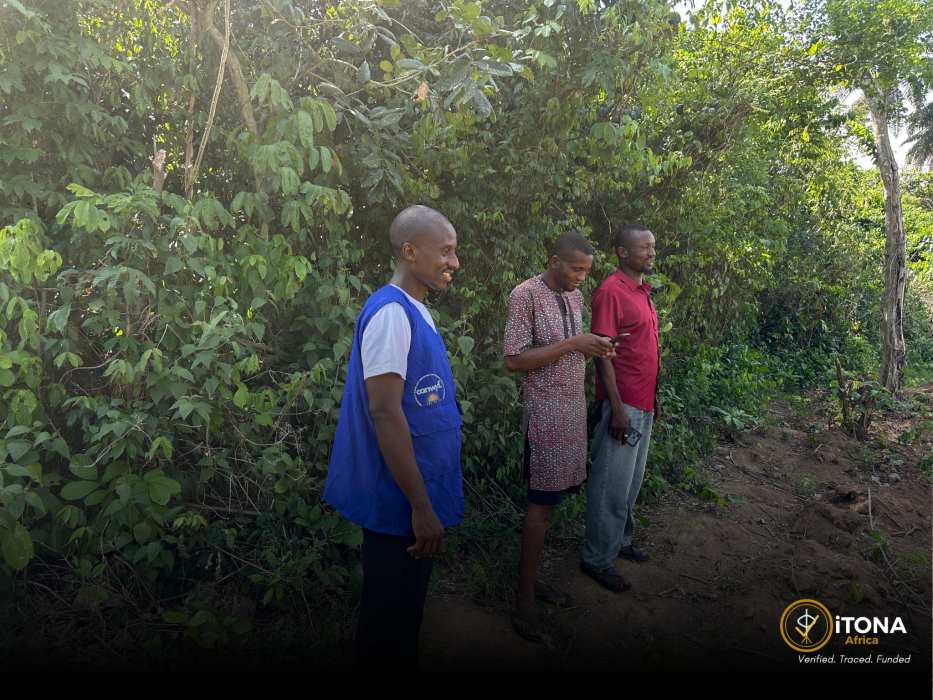
A CAN-WYF coordinator visits the farmer, verifies their identity, records the agricultural activity, maps the farm plot using GPS and documents observations from the field. The system also captures community-level human intelligence, including audio observations in the local language.
The result is not simply another database of farmers.
It is a growing evidence trail.
A farmer's identity becomes connected to their farm, their location, their crops, their visits and, progressively, their harvest and market activity.
From farmer identity to crop traceability
The deeper purpose of iTONA is to move agricultural documentation beyond a one-time registration exercise.
A farmer should not simply exist in a government spreadsheet or NGO beneficiary list.
We need to know what happens over time.
Who planted?
Where was it planted?
What crop was planted?
Was the farm visited?
What was observed?
When was the crop harvested?
How much was harvested?
Who bought it?
How did it move?
Where was it processed?
And ultimately, where did it go?
iTONA is being designed to connect these points.
Through its wider agricultural ecosystem, the platform is intended to connect verified farmers with market access, storage, logistics, insurance and financial services. Its marketplace and movement records are designed to make the journey of agricultural produce increasingly traceable from origin through the value chain.
That changes the conversation.
We move from “Trust this farmer”* to “Here is the evidence.”
Traceability can become an incentive for better farming
Traceability should not become another burden imposed on farmers.
It should become an asset.
If a farmer consistently maintains a verifiable production history, that record can help demonstrate reliability to buyers, financial institutions, insurers and development programmes.
iTONA is therefore designed so that verification becomes an economic gateway rather than merely an administrative exercise.
A verified farmer can have a credential that can be independently checked. Buyers can verify that a produce listing is connected to a real farmer and a real farm. Institutions can verify farmer records rather than relying entirely on self-reported programme data.
This is particularly important in an environment where agricultural data is often fragmented.
The community must become part of the verification system
Technology alone cannot solve this problem.
Agriculture is local.
Knowledge is local.
Trust is local.
That is why iTONA combines digital technology with community verification.
Its model includes community participation and a Seal Council that reviews farmer records before certification. The resulting community-backed credential is intended to provide an additional layer of trust around the farmer's identity and agricultural record.
This is important because the most sophisticated technology cannot replace the knowledge of people who understand the community, the land and the agricultural realities around them.
Technology should strengthen that knowledge, not erase it.
The farmer should not be the weakest link in the food system
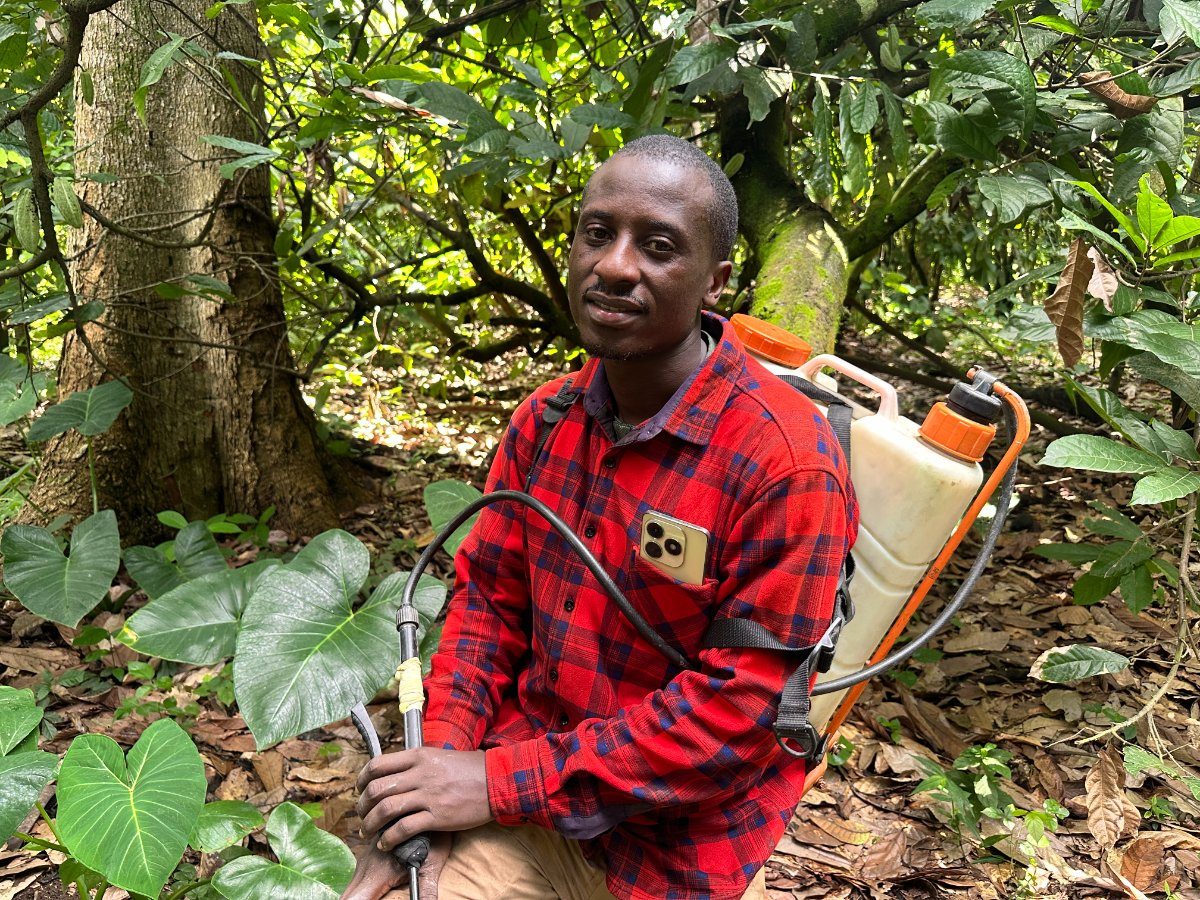
If we genuinely care about food safety, food security and public health, then we must care about the conditions under which farmers produce our food.
That means moving beyond occasional training programmes.
It means building continuous systems of documentation, verification, education, market access and accountability.
It means creating economic reasons for farmers to adopt better practices.
And it means recognising that a farmer who feeds a community is not simply a beneficiary of agricultural policy.
The farmer is one of the most important actors in our public health system.
From the farm to the plate
The future we should be building is one where a consumer, buyer, institution or regulator can increasingly ask:
Where did this food come from?
And the system can provide an answer.
Not a guess.
Not a paper record produced months later.
Not an unverifiable claim.
But a traceable agricultural history.
That is the direction iTONA AFRICA is taking.
CAN-WYF's pilot in Araromi-Ekiti is already demonstrating the foundation of this approach, with farmers enrolled, farm plots GPS-mapped, field visits verified and community credentials issued through the platform. The system is also beginning to record harvest information, creating the foundation for deeper crop-level traceability.
The ambition is larger than a farmer registry.
It is to build an agricultural infrastructure where identity, production, movement, markets, finance and accountability can speak to one another.
Because agriculture is not only about growing food.
It is about protecting the people who grow it, the people who consume it and the communities whose future depends on it.
And perhaps the most important question we can begin asking is not simply:
“How much food did we produce?”
But:
“Can we prove how it was produced?”
That is the conversation traceability brings to the table.
And that is the conversation iTONA AFRICA is helping us begin.

Comments (0)
Be the first to share your thoughts on this article.